What shortens the interval
- Pets — shed hair and dander load a filter faster than plain household dust.
- Someone smokes indoors — particulate load is far higher than typical dust.
- Allergies or asthma in the household — a fresher filter matters more when someone reacts to what builds up.
- Renovation or construction dust — drywall dust and sawdust can clog a filter in days.
- Windows and doors often open — outdoor dust and pollen add to the load.
- Heavy runtime during peak heating or cooling season — more air moved means faster saturation.
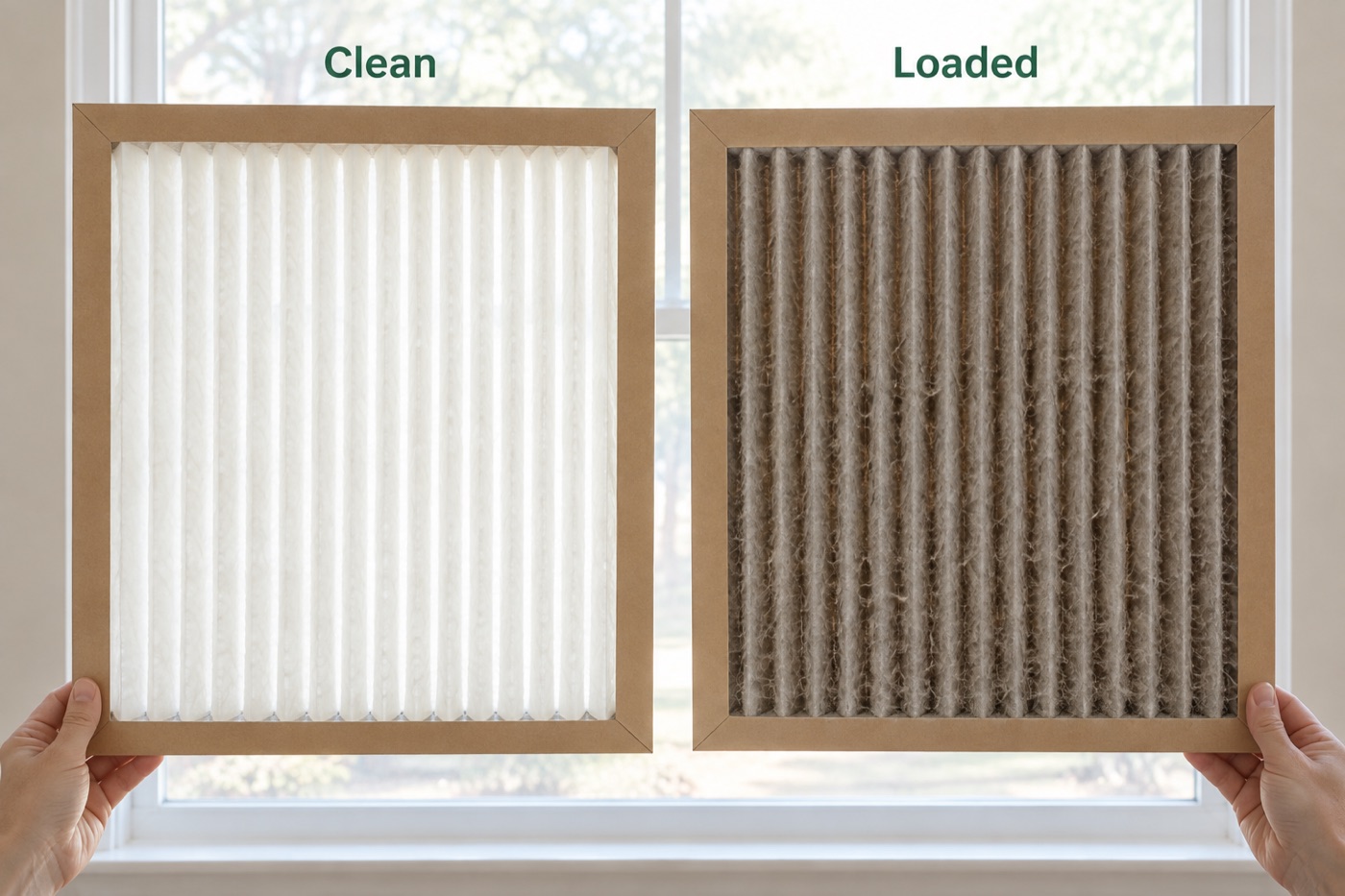
These compound rather than replace each other — pets and a recent renovation shorten the interval more than either alone. The chart also assumes typical runtime: a system barely used through a mild spring loads its filter slower than one running constantly in July, so treat every interval here as a starting point. The light test in step 5 above beats any chart, including this one.
Fiberglass vs. pleated
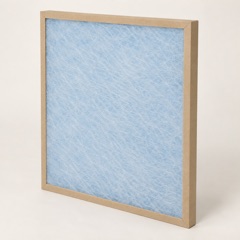
Fiberglass protects the equipment — it stops large debris from reaching the blower, nothing finer.
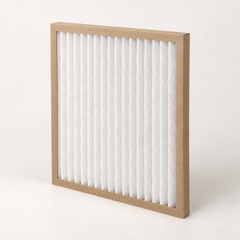
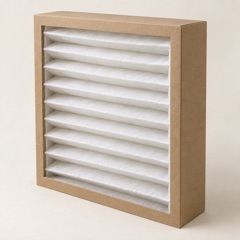
Pleated protects the air you breathe — its folded media traps the smaller particles fiberglass lets through.
What MERV rating means
MERV (Minimum Efficiency Reporting Value) rates how fine a filter's mesh is. Most residential systems are comfortable between MERV 8 and 13. Higher isn't automatically better: a MERV rating above what your system was designed for restricts airflow more than it improves air quality, forcing the blower to work harder for a smaller benefit. Check your system's manual, or ask an HVAC technician, before buying above MERV 13.
Why it matters
A clogged filter restricts airflow, so the system works harder to move the same amount of air.
Routinely replacing or cleaning your air filters can lower a central air conditioner's energy consumption by 5–15%, according to the U.S. Department of Energy — the saving comes from keeping up the habit, not from any one clean filter. U.S. Department of Energy — Energy Saver 101: Home Cooling.
A pleated filter runs roughly $10–15, and a household on the 60–90 day schedule buys about three a year — cheap insurance against a system working harder than it needs to.
It's a small habit with a measurable return — not a reason to worry about the one that's overdue right now.
Common questions
How often should you change a furnace filter?
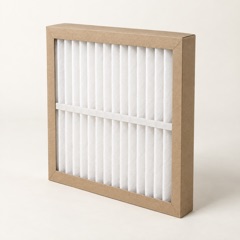
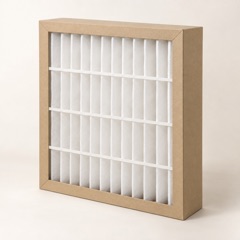
A standard 1-inch pleated filter: every 60–90 days. A 1-inch basic fiberglass filter: every 30 days. A 4-inch media filter: every 6 months. A 5-inch media filter: every 6–12 months. Pets, indoor smoking, or renovation dust shorten all of these.
How do I know what size furnace filter I have?
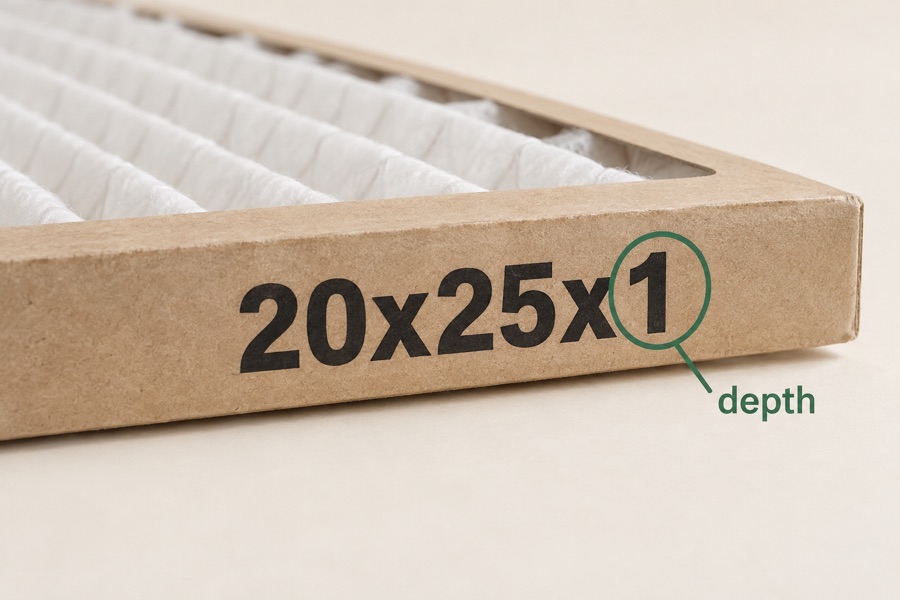
The size is printed on the cardboard frame edge as three numbers, such as 20×25×1 — length, width, and depth in inches. The depth (the third number) is what determines the replacement interval.
Are furnace filters and AC filters the same?
In most homes, yes — if your furnace and air conditioner share the same air handler and return duct, they share the same filter, so one schedule covers both year-round.
What happens if you don't change your furnace filter?
Airflow drops as the filter loads up, so the system runs longer and harder to move the same amount of air, which raises energy use and adds wear. Left long enough, a badly clogged filter can also cause an air conditioner’s evaporator coil to ice over.
Can you clean or wash a furnace filter?
Fiberglass and most pleated filters are disposable — washing them breaks down the media and can push trapped debris deeper in. A handful of media filters are labeled washable; check the frame before you try. When in doubt, replace rather than rinse.
Does a thicker filter last longer?
Yes — a 4-inch or 5-inch media filter has far more surface area than a 1-inch filter, so it takes longer to load up and typically lasts 6 to 12 months instead of 1 to 3. The tradeoff is upfront cost and needing a system built to accept the extra depth.
What MERV rating should I buy?
Most residential systems are comfortable between MERV 8 and 13. Going higher isn't automatically better — a MERV rating your system wasn't designed for restricts airflow instead of improving air quality. Check your manual, or ask an HVAC technician, before buying above MERV 13.